I’m just getting started, where should I begin ?
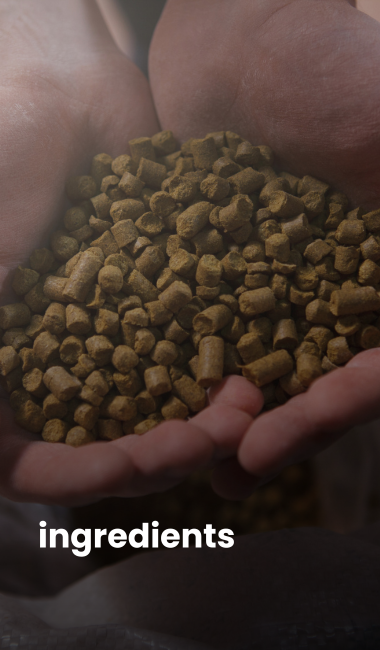
Dive into the fascinating world of homebrewing! Whether you're simply curious or already passionate about craft beer, this section is your gateway to a sparkling adventure.
I’m intermediate, what’s next ?
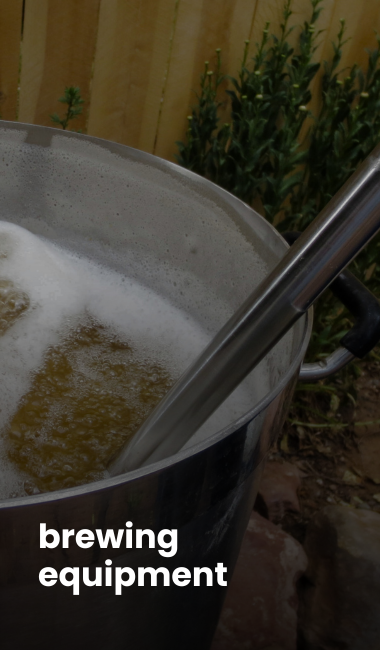
Welcome to the inner circle of passionate brewers. If you already know what dry hopping is or how to manage fermentation, it’s time to take things to the next level…
I’m going pro, I’m the boss now !
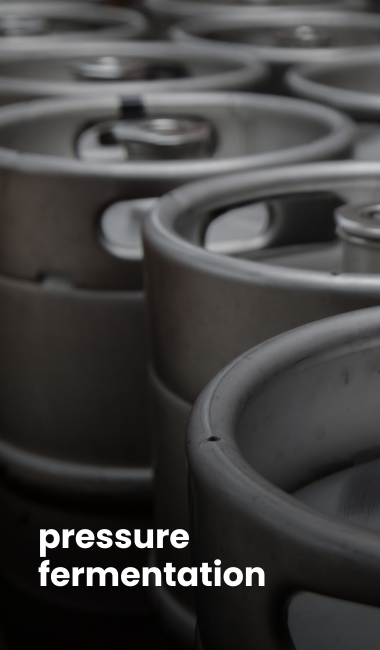
You’ve brewed, tasted, adjusted… now you’re ready to take the leap. This section is your launchpad into the exciting world of professional microbrewing!
Discover the Best Sellers of the Moment
Not sure where to start?
Let us guide you!
Beginner Level
The basics of brewing: from water to glass
Brewing your own beer is the perfect blend of technical precision and creativity. Before you pop your first bottle cap, here are the fundamentals for turning raw ingredients into a unique sensory experience.
The essential ingredients
- Malt : The soul of your beer. Made from barley, it provides body, color, and the sugars needed for fermentation.
- Hops : The brewer’s spice. They define bitterness, shape aromas (citrus, resin, floral), and ensure natural preservation.
- Yeast : The silent worker. It transforms sugar into alcohol and fine CO2 bubbles.
- Water : It makes up more than 90% of your beer; its purity is the foundation of your recipe.
The 6 key steps of brewing
- Mashing : Crushed malt is infused in hot water to extract its full sugar potential.
- Lautering : The precious liquid (wort) is separated from the spent grains.
- Boiling : The wort is boiled to sterilize it and to add hops.
- Cooling : A critical step where the temperature is rapidly lowered to safely pitch the yeast.
- Fermentation : The patience phase. Over a few weeks, yeast transforms wort into beer.
- Bottling : The conditioning stage, followed by a necessary rest for final carbonation.
READ THE BLOG ARTICLE.
Rolling Beers Beginner Kits: Stress‑Free Homebrewing
If you’ve been dreaming about brewing your own beer but aren’t sure where to start, the Rolling Beers beginner kits make the jump incredibly easy. This isn’t just a kit — it’s a guided, hands‑on brewing experience that takes you from your first boil to that first proud pour.
Why choose Rolling Beers kits?
- All‑in‑one solution : Fresh ingredients, essential equipment, and a super clear step‑by‑step guide — everything you need is in the box.
- Style variety : IPA, Blonde, Wheat, Stout… explore the full spectrum of craft beer flavors.
- No technical barrier : You don’t need to be an engineer — enthusiasm is enough to brew a great first batch.
- Guaranteed success : Recipes are tested and dialed‑in to deliver a tasty, rewarding beer right from your first bottle.
In short: These kits are the perfect entry point into homebrewing without feeling overwhelmed. You’ll end up with several liters of craft beer you can proudly enjoy — or share, if you’re feeling generous.
DISCOVER THE BEGINNER KITS.
Why choose a complete equipment pack instead of buying gear piece by piece?
Getting into homebrewing often raises a lot of practical questions. Our equipment packs are designed to remove the guesswork so you can start brewing confidently from day one.
The advantages of an all‑in‑one pack
- A smart, cost‑effective choice : Packs offer better value than buying items individually, helping you get a solid setup without overspending.
- No missing pieces, no stress : Everything you need is included. From the hydrometer to the capper, you won’t find yourself stuck mid‑brew because something’s missing.
- Technical consistency : Every component is selected to work seamlessly together — sizes, volumes, compatibility. No unpleasant surprises.
- Room to grow : The equipment works not only with our beer kits but also with all‑grain brewing, supporting you as your skills evolve.
A complete setup for every step
Our packs cover the full brewing cycle, just like in a real craft brewery:
- Brewing : Kettles, spoons, and precision thermometers.
- Fermentation : Airtight fermenters and airlocks for full protection.
- Quality control : Hydrometer and test jar to track your beer’s progress.
- Bottling : Capper, cleaning brushes, and conditioning tools.
The perfect gift idea: A Rolling Beers equipment pack is a fun, complete, long‑lasting experience. It’s the ideal starting point for anyone who wants to brew like a pro with zero hassle.
DISCOVER OUR EQUIPMENT PACKS.
The ABCs of Brewing Hygiene
In the brewing world, we often say that 80% of the job is cleaning. Spotless hygiene is the only way to ensure your sweet wort becomes a clean, flavorful beer — free of off‑flavors and infections.
The core principles
- Cleaning isn’t sanitizing : Cleaning removes visible dirt (grain residue, hops). Sanitizing kills the invisible microorganisms. Both steps matter — and neither replaces the other.
- Timing is everything : Rinse your gear right after use. Fresh residue comes off easily; dried‑on gunk does not.
- Watch out for scratches : Use soft sponges. A scratch inside a plastic fermenter becomes a “bacteria hotel” you’ll never fully clean out.
- Anything that touches cold wort : After the boil, every single item (spoon, tubing, fermenter) must be sanitized before contact. No exceptions.
Your cleaning toolkit
- Cleaner (e.g., Enzybrew 10) : Breaks down organic material without scrubbing like crazy.
- Sanitizer (e.g., Oxibrew) : Use right before brewing or bottling — often no‑rinse for maximum safety.
- Bottle brush (e.g., long‑neck brush) : Essential for keeping bottle interiors spotless.
In short: Good hygiene takes discipline, but it quickly becomes second nature. It’s the single best investment you can make in the quality of your future beers.
READ THE BLOG ARTICLE.
Nailing Your Bottling and Bottle Conditioning
Bottling is the final stretch before you get to enjoy your beer. During this conditioning phase, your brew matures and develops its natural carbonation through a carefully controlled “bottle fermentation.”
Steps to perfect carbonation
- Priming sugar : Right before bottling, add a small amount of sugar (typically 6–7 g/L). The remaining yeast will ferment it and produce CO2.
- Even mixing : Gently blend your sugar syrup into the beer. Poor mixing leads to flat bottles and others that gush like crazy.
- Capping : Make sure every cap is sealed tight. A loose crimp lets CO2 escape and leaves you with flat beer.
- Warm conditioning : Keep your bottles at room temperature (68–72°F / 20–22°C) for at least two weeks so the yeast can do its job.
Conditioning equipment
- The bottling bucket : Allows you to rack clear beer and mix sugar evenly without disturbing yeast sediment.
- Brewing sugar : Table sugar or dextrose — dose it properly for controlled carbonation and a clean sparkle.
- Bottle filler : The magic tool that fills bottles from the bottom with no foam and minimal oxygen pickup.
- Bottles : Choose brown glass to protect your beer from UV light, which destroys hop aroma.
- Caps : Available in 26 mm (most common) or 29 mm depending on your bottle necks — they ensure a perfect seal.
- Capper : Handheld or bench‑mounted, it guarantees a firm, airtight crimp to trap that precious CO2.
The patience tip: After warm conditioning, chill your bottles for a few days before opening. This helps CO2 fully dissolve into the beer and gives you a stable, creamy head.
Help! Did I ruin my batch? (Classic beginner mistakes)
Don’t panic! Brewing is a learning process, and most “mistakes” beginners worry about aren’t fatal at all. Before dumping anything down the drain, check whether your issue is one of these very common situations.
The most common scares
- The airlock isn’t bubbling : The classic panic moment. In 90% of cases, your fermenter just isn’t perfectly airtight. If you see a white foam (krausen) forming on top, fermentation is absolutely happening!
- My beer looks cloudy : Totally normal for a first batch. Clarity comes with time, cold conditioning, and better filtration. The flavor won’t suffer from haze.
- Sediment at the bottom of the bottle : Not a mistake — it’s proof of natural bottle conditioning! It’s just yeast settling after creating your carbonation. Pour gently to leave it behind.
- Bubbling stopped too soon : Active fermentation can last only 48 hours depending on temperature. That doesn’t mean it’s done — the yeast keeps working quietly. Patience is key.
What to do if you’re unsure?
- Take a gravity reading : It’s the ultimate truth. If gravity is dropping, fermentation is happening — no matter what the airlock says.
- Taste your wort/beer : If it doesn’t smell or taste sour, rotten, or like persistent sulfur, your beer is probably fine.
- Give it time : Patience solves 80% of “weird flavor” issues in early batches.
In short: It’s actually rare to completely ruin a beer. It may turn out different from what you expected, but it will still be yours! If doubts remain, take notes so you can adjust your next brew.
Reached the intermediate level?
What’s next?
Intermediate Level
Moving to All‑Grain Brewing: BIAB or Electric System?
Ready to take full control of your recipes? Switching to all‑grain is the true rite of passage for any brewer. Two main methods let you turn grain into beer: the simplicity of a brew bag or the comfort of an electric system.
BIAB vs. Electric System: The Showdown
- BIAB (Brew In A Bag) : The most accessible method. You use a large mesh bag inside a basic kettle. It’s affordable, easy to clean, and takes up very little space.
*See our article: “How to Brew in a Bag”. - Electric brewing system : Maximum comfort (think Grainfather or Brew Monk). It handles temperature steps with degree‑level precision and includes a recirculation pump for optimal efficiency.
- Batch size & capacity : Depending on your needs, these systems let you brew anywhere from 20L to 65L. Choose based on your drinking habits and available space.
- Investment : BIAB is perfect for testing all‑grain on a budget. Electric systems are a long‑term investment for brewers seeking precision and repeatability.
The gear you need to make the jump
- Kettle & brew bag (BIAB) : A sturdy, reusable bag sized to fit your kettle (gas or electric).
- Electric brewing system : All‑in‑one units available in 20L, 30L, 45L, or 65L, with built‑in heating and programmable controls.
- Malt mill : Essential for crushing grain right before brewing to ensure maximum freshness.
- Wort chiller : All‑grain batches are larger; fast cooling is crucial for clarity and sanitation.
In short: Whether you choose the flexibility of a 20L batch or the power of a 65L system, all‑grain brewing opens the door to unlimited creativity.
GUIDE TO CHOOSING YOUR ELECTRIC BREWING SYSTEM
Why is controlling fermentation temperature essential?
Fermentation is the true heart of brewing. This is where yeast transforms your wort into beer. But be careful: poor temperature control can ruin your efforts, even if your recipe is flawless.
The risks of unstable temperatures
- Off‑flavors : Too‑warm fermentation produces excessive esters (banana, solvent) or fusel alcohols (harsh, hot finish). Too cold, and you risk diacetyl (buttery flavor).
- Yeast stress : Sudden temperature swings stress the yeast, which can stall fermentation and lead to “gushing” (over‑carbonation) in the bottle.
- Weakened microbial defense : A stable temperature allows yeast to dominate quickly, preventing opportunistic bacteria from taking hold.
Our solutions for professional‑level control
To brew year‑round, no matter the season, here are the essential tools selected by Rolling Beers:
- Inkbird controllers : The simple way to control a fridge or heating mat.
- Ferminator Connect : A compact, connected fermentation chamber with degree‑level precision.
- RAPT chambers : High‑end tech for demanding brewers who want remote monitoring and full control.
Concrete example: During primary fermentation, yeast generates heat. Your wort can rise 2–4°C above room temperature. Without regulation, you lose control of your beer’s flavor profile.
In short: Investing in temperature control ensures consistent batches and clean, precise aromas. It’s the key step that takes you from amateur brewing to professional‑level results.
Create Your Own Recipe and Understand Your Ingredients
Ready to stop following instructions and start designing the beer that truly reflects your taste? Creating your own recipe means learning how to balance flavor, bitterness, and mouthfeel by understanding what each ingredient brings to the table.
The levers of recipe creation
- Malt selection : Base malts provide fermentable sugars. For full creative freedom, explore our malts sold by the kilo: blend base malts with specialty malts (Caramel, Chocolate, Roasted) to fine‑tune color and flavor.
- Hop profile : Know the difference between bittering hops and aroma hops (late additions or dry hopping). A single hop variety can completely shift your beer’s character—from earthy European notes to bold American tropical fruit.
- Yeast strain : Yeast defines the style. Belgian strains bring spicy phenolics, while American strains stay clean to let hops shine.
- Brewing water : For optimal enzymatic activity during the mash, aim for a pH between 5.2 and 5.5. Draw your water the day before to let chlorine naturally dissipate.
Tools to help you craft your recipe
- Get inspired by our blog recipes : Don’t start from a blank page. Explore our detailed recipes to understand classic balances before customizing them.
- Brewing software : Use tools like JolieBulle or BeerSmith to calculate gravity, bitterness (IBU), and color (EBC) with precision.
- Ingredient sheets : Check the technical specs of our malts and hops to know alpha acid levels or diastatic power.
- SMaSH brewing : A great learning method—one malt, one hop—to understand the pure impact of each ingredient.
In short: Recipe creation requires method. By understanding each building block and mastering your water parameters, you’re no longer brewing randomly—you’re composing a unique sensory experience.
DISCOVER OUR BREWING BLOG.
Water Treatment: The Invisible Ingredient That Changes Everything
Water makes up more than 90% of your beer. Reaching the intermediate level means understanding that your mineral profile isn’t a constraint — it’s a tool to shape the balance between malt and hops.
Why adjust your brewing water?
- pH optimization : A mash pH between 5.2 and 5.5 ensures efficient sugar conversion and prevents harsh astringency.
- Yeast health : Calcium and magnesium are essential nutrients for strong fermentation and proper flocculation.
- Flavor signature : Minerals directly influence perception: sulfate sharpens bitterness, while chloride enhances body and roundness.
The 3 steps to mastering your water profile
- Get your profile : Check your city’s annual water report or use tools like LittleBock to know your levels of calcium, magnesium, sodium, sulfate, chloride, and bicarbonate.
- Adjust pH : Use lactic or phosphoric acid to acidify your mash and sparge water (target 5.8 pH for sparging).
- Add brewing salts : Use calcium sulfate (gypsum) for a drier profile or calcium chloride for a silkier mouthfeel.
Pro tip: The Sulfate/Chloride Ratio
It’s the key to balance!
• Ratio > 2 : Ideal for IPAs (crisp, assertive bitterness).
• Ratio < 0.5 : Perfect for Stouts or NEIPAs (smooth, malt‑forward).
Did you know? Historically, beer styles were shaped by local water. The ultra‑soft water of Pilsen gave birth to pale lagers, while Dublin’s carbonate‑rich water favored dark, roasty stouts.
In short: Mastering water chemistry gives you the power to brew any world style with professional precision — no matter where you live.
READ THE BLOG ARTICLE.
Ready to take it to the next level?
Brew like a pro !
Expert Level
Pressure Fermentation: Brew Like a Pro Brewery
Born in the professional brewing world, pressure fermentation is now fully accessible at home. The idea is simple: let the yeast work in a closed environment where pressure is precisely controlled.
The advantages of fermenting under pressure
- Ultra-clean flavor profile : Pressure suppresses the formation of esters and fusel alcohols. The result is a cleaner beer with fewer off-flavors, even if fermentation temperatures run a bit warm.
- Faster turnaround : You can brew lagers in under 3 weeks at room temperature — no need for a dedicated 50°F (10°C) fermentation fridge.
- Oxygen protection : Working in a closed loop means your beer never touches air. It’s the ultimate safeguard for IPAs and hop-forward styles.
- Natural carbonation : CO₂ builds up directly during fermentation, saving time during packaging or kegging.
Essential equipment
- Pressurized fermenter (e.g., FermZilla) : Built to withstand internal pressure (often up to 2.4 bar).
- Spunding valve (e.g., BlowTie kit) : The safety device that releases excess gas while maintaining your chosen pressure.
- Closed‑transfer kit(e.g., Nukatap counter‑pressure filler) : Allows you to bottle without any oxygen exposure.
Best suited styles : This technique shines for Lagers (Pils, Helles) to achieve perfect crispness, and for NEIPAs and West Coast IPAs to preserve delicate hop aromatics.
In short: Pressure fermentation is the natural next step for demanding homebrewers. It’s fast, clean, and incredibly effective for achieving professional‑level results at home.
PRESSURE FERMENTATION: HOW‑TO GUIDE.
Switching to Kegs and Counter‑Pressure Filling
No more scrubbing 50 bottles! Moving to kegging not only saves a huge amount of time, it also protects your beer from oxidation thanks to closed‑loop CO₂ transfers.
The advantages of keg conditioning
- The ultimate oxygen protection : Counter‑pressure transfers ensure your beer never touches air, preserving bright hop character (IPA, NEIPA).
- Draft‑style serving : Dial in your carbonation level to the exact PSI and pour yourself a pint straight from the tap, just like at the bar.
- Space and time saver : A single 19L soda keg replaces more than two cases of bottles. Cleaning and purging become dramatically easier.
The 4‑step transfer protocol
- Preparation and purging : Clean your keg and purge all air by filling it with CO₂. Set the keg to a slightly lower pressure than your fermenter.
- Connecting the loop : Connect the fermenter’s “Beer Out” to the keg’s “Beer Out” (Ball Lock). Install a Spunding Valve on the keg’s gas post to regulate venting.
- Pressure‑driven transfer : Push CO₂ into the fermenter to move the beer. The pressure difference transfers the liquid smoothly, without turbulence or foam.
- Level control : Use a scale under the keg (1 kg = 1 L) or a device like the Duotight Flow Stopper which automatically stops the flow when the keg is full.
Pro tip: Use John Guest or Duotight fittings for your beer lines. They offer quick, leak‑free, tool‑less connections — perfect for switching easily from fermenter to keg.
In short: Switching to kegs is a game‑changer for homebrewers. It guarantees beer that stays fresh, perfectly carbonated, and fully protected from oxidation.
DISCOVER OUR RANGE OF KEGS AND ACCESSORIES.
Optimizing Your Process: Temperature Stability, Connected Gravity, and Anti‑Oxidation
At an expert level, the difference between a good beer and an exceptional one lies in mastering the details. The goal is simple: eliminate guesswork and protect your beer from external stress, from mash to pour.
The pillars of optimization
- Thermal stability : Use insulated jackets or double‑wall kettles. A mash temperature that doesn’t fluctuate by even half a degree ensures perfect repeatability in your beer’s body and mouthfeel.
- Connected gravity tracking : With connected hydrometers (such as the Rapt Pill or Graviator), monitor fermentation progress and temperature in real time on your smartphone — without ever opening your fermenter.
- Anti‑oxidation practices : Oxidation is enemy number one. Use Duotight fittings and John Guest tubing to perform CO₂‑purged, closed‑loop transfers. Zero oxygen contact = optimal hop aroma retention. And for all your dry hops, consider the Hop Bong!
- Controlled cold crash : Rapidly chilling your beer at the end of fermentation helps yeast and particles settle. Combined with a CO₂ backfill to prevent air suck‑in, it’s the key to a clear, stable beer.
The brewer’s tech arsenal
- Connected hydrometer : Monitor final gravity (FG) without sampling — eliminating contamination risks.
- Heating belts and insulation wraps : The perfect combo to maintain stable fermentation temperatures, even in winter.
- Quick‑connect valves and fittings : Simplify transfers and cleaning with fast, tool‑less connections for maximum efficiency.
Expert tip: Data is your best ally. By logging your fermentation curves, you can pinpoint the ideal moment for dry hopping or triggering your cold crash.
In short: Optimizing your process turns brewing into a precise science. Fewer surprises, more enjoyment, and — above all — consistent beer quality batch after batch.
Yeast Starters: Supercharge Your Fermentations
Brewing a high‑gravity beer (Imperial Stout, Tripel) or using a liquid yeast close to its date? A starter is your insurance policy. It multiplies your yeast cells before brew day to guarantee a proper pitch rate.
Why make a starter?
- Maximum vitality : By waking your yeast in a small volume of wort before the big job, you shorten the lag phase and reduce pitching stress.
- Cleaner flavor profile : A proper pitch rate limits off‑flavors caused by under‑pitching (fusel alcohols, unwanted esters).
- Economy and reuse : A starter lets you stretch a single vial of liquid yeast for a big batch — or even split it for future brews.
The microbiologist’s survival kit
- Erlenmeyer flask : Borosilicate glass withstands heat. You can boil your starter wort directly in it (if compatible) and then chill it.
- Magnetic stir plate : Essential tool. It creates a vortex that continuously oxygenates the wort, promoting exponential cell growth.
- Dried malt extract : The ideal base for a 1.036 starter wort — the perfect environment for healthy yeast growth.
All this equipment is included in our yeast starter kit.
Pro tip: Prepare your starter 24–48 hours before brew day. Once activity slows, chill it to sediment the yeast, decant the spent wort, and pitch only the clean yeast slurry.
In short: Mastering yeast starters turns you from brewer to yeast manager. It’s the final step to ensuring success with your most ambitious beers.
READ THE BLOG ARTICLE.
Mastering Lagers and Low‑Temperature Fermentations
Brewing a Lager means stepping into a world of precision and patience. Unlike Ales, bottom‑fermenting yeasts (Saccharomyces pastorianus) require a cold, stable environment to produce that clean, crisp, refreshing profile we all love.
The three pillars of a successful Lager
- Consistent cold temperatures : These yeasts perform best between 8°C and 12°C. At these temperatures, they produce almost no fruity esters, allowing malt and hops to shine with clarity.
- The Diacetyl Rest : Near the end of fermentation, raise the temperature to 16–17°C for 48 hours. This encourages the yeast to “clean up” diacetyl — the compound responsible for unwanted buttery flavors.
- Lagering (cold maturation) : The final step. Keep your beer as close to 0°C as possible for 3 to 6 weeks. This cold conditioning refines flavors and drops out remaining particles for brilliant clarity.
Equipment to master the cold
Without temperature control, there is no Lager. Here’s the recommended arsenal to keep your yeast in its comfort zone:
- Inkbird ITC‑308 controller : Turns any old fridge into a precise fermentation chamber.
- Ferminator or RAPT chambers : All‑in‑one solutions for managing temperature steps and lagering without hassle.
- Glycol chiller (Icemaster) : For brewers using double‑wall fermenters who want pro‑level temperature control.
Did you know? Because they work slowly and at low temperatures, Lager yeasts require roughly twice the pitch rate of an Ale. This is where a starter becomes essential!
In short: Lagers tolerate no mistakes, but reward precision with unmatched drinkability. They represent the technical pinnacle of dedicated homebrewing.
Our main brands
Our main brands
Rolling Beers offers a wide selection of leading brands specialized in beer brewing. While we have access to their full catalogs, not all products are listed on our website. If you’re looking for a specific part or ingredient, feel free to contact us via our support or by phone. Our customer service team is also available for advice, order tracking, or quotes.
Rolling Beers offers premium brewing brands.
Looking for a specific product ?
Contact our customer service team for any request or advice.
24/48h Shipping
Click&Collect
Customer Service
Secure Payments
24/48h Shipping
Because beer can’t wait, at Rolling Beers we ship your orders within 24–48 hours. Estimated delivery in 24–48 hours.
Click & Collect
Are you in the Montpellier area ? Skip the shipping fees and pick up your order directly from our warehouse.
Customer Service
The Rolling Beers team supports you from A to Z with all your requests and projects. Get in touch — we’ll be happy to help !
Secure Payments
At Rolling Beers, you can shop with confidence : all card payments and bank transfers are 100% secure.
Subscribe to our newsletter !
Don’t miss a thing from the Rolling Beers adventure — join our newsletter and enjoy exclusive offers, early access to new products, and plenty of expert tips !
By subscribing to our newsletter, you agree to receive promotional emails.


.png)
.png)
.png)
.png)
_7ac5ff.png)
_1_3240aaeb.png)
.png)
.png)
_3d5348c8.png)
_1.png)
.png)
.png)
_1.png)