
Beer oxydation is a subtle process that can affect aromas from the earliest brewing stages, especially during mashing. Wet cardboard flavor, loss of freshness, and unstable aroma profiles often stem from early reactions in the mash.
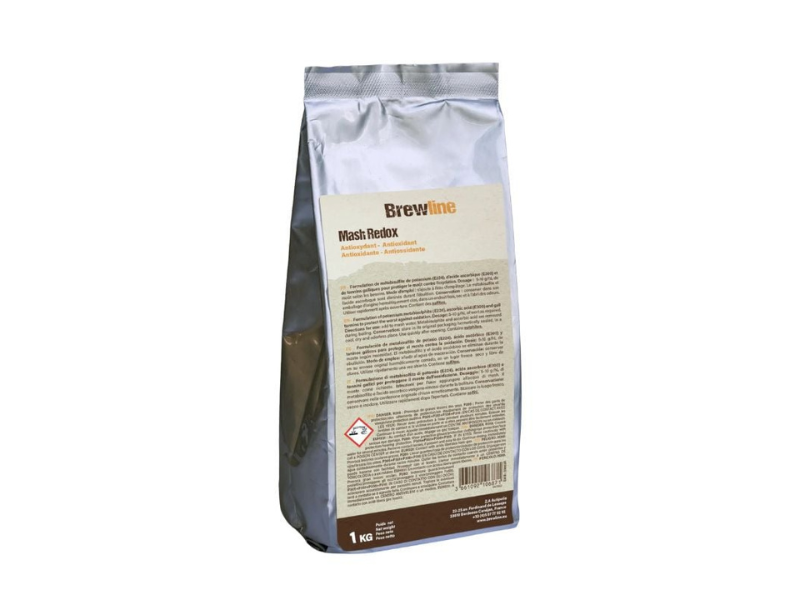
Mash Redox, an antioxidant brewing aid developed by Brewline, offers a straightforward and effective solution.
It works by inhibiting lipoxygenase (LOX), an enzyme naturally found in malt. LOX triggers the oxidation of unsaturated fatty acids, leading to compounds like trans-2-nonenal — responsible for off-flavors such as wet cardboard or mashed potatoes in beer.
The benefits of Mash Redox against beer oxidation
Beer oxydation isn’t limited to bottling or contact with air. It starts much earlier—during mashing—when malt fatty acids meet dissolved oxygen.
That’s where Mash Redox comes in: by acting in the mash, it blocks enzymatic reactions responsible for off-flavors.
Its main benefit is preserving aromatic freshness. By limiting the formation of trans-2-nonenal—the compound behind wet cardboard flavor—Mash Redox protects hoppy profiles, malt notes, and the beer’s sensory clarity. Brewers report improved aroma stability, even after several weeks of storage.
Mash Redox is a brewing aid, not an additive. It fully evaporates during boiling, leaving no trace in the final beer. It doesn’t interfere with fermentation or alter the recipe or flavor profile. Its action is purely preventive, targeting the early stages of brewing. Simply add 5 to 10 g/hL to the mash water just before adding the grains.
Its cost is minimal compared to its impact: around €0.30 per hectoliter. For craft breweries or brewpubs, it’s a small investment for a lasting quality gain.
Another advantage: the Mash Redox Nature version (coming soon to Rolling Beers) is compatible with organic beers. Its formulation contains no sulfites or residues and integrates easily into existing processes without changing equipment or protocols.
In summary, Mash Redox allows you to :
- Limit oxidation in beer from the mashing stage
- Reduce off-flavors caused by oxidized precursors
- Preserve hop and malt aromas
- Improve aroma stability without altering the recipe
- Easily integrate an antioxidant tool into the brewing process
- Control costs without compromising on quality
Understanding oxidation in beer : the role of lipoxygenase
Beer oxydation isn’t just about contact with air. It’s often enzymatic and begins during mashing, well before fermentation or packaging. One of the main drivers of early oxidation is an enzyme naturally present in malt: lipoxygenase, or LOX.
LOX catalyzes the oxidation of unsaturated fatty acids found in the malt husk, such as linoleic acid. This reaction produces hydroperoxides—heat-resistant precursors that survive boiling. During the boil, they convert into stable aldehydes, the most well-known being trans-2-nonenal, responsible for the infamous wet cardboard or mashed potato flavor in beer.
Mash Redox acts precisely at this stage by inhibiting LOX activity during mashing, preventing the formation of these oxidized precursors. By blocking the reaction at its source, it ensures the wort doesn’t carry unwanted compounds into the hot side.
Importantly, inhibiting LOX has no impact on other essential enzymatic activities in the mash, such as α- and β-amylases or endogenous β-glucanases involved in saccharification.
LOX is denatured at 70 °C, and Mash Redox is eliminated above 75 °C. The wort transferred to the fermenter is therefore less oxidized and free of antioxidant residue.
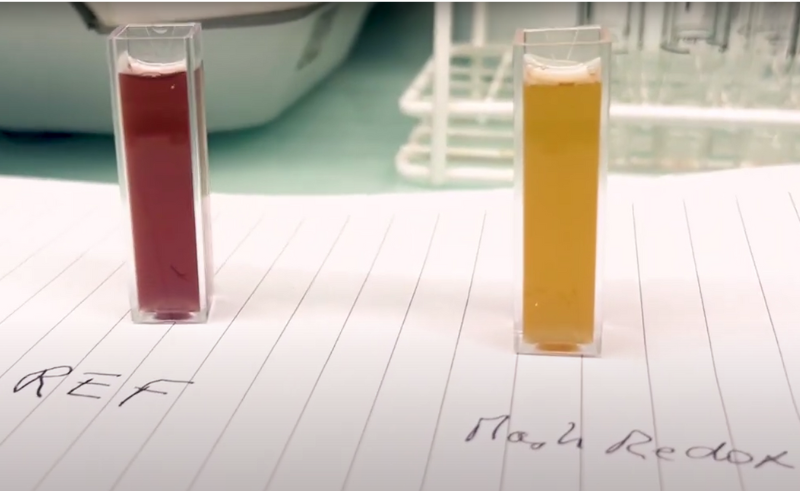
This mechanism was validated through research conducted in collaboration with the University of Louvain-la-Neuve, demonstrating Mash Redox’s effectiveness in reducing oxidation markers in wort. The studies also showed a more than three-month extension of organoleptic stability compared to a control beer brewed under identical conditions without Mash Redox.
In summary :
- Malt lipoxygenase is responsible for early-stage oxidation
- It produces oxidized precursors that survive boiling
- Trans-2-nonenal is the main compound behind the cardboard flavor
- Mash Redox blocks this enzymatic reaction during mashing
Mash Redox : a subtle brewing aid for more stable beer
Beer oxydation is a complex phenomenon, but its effects are well known to brewers: off-flavors, aroma loss, and premature aging. By acting during mashing, Mash Redox blocks oxidation at the source, before precursors become irreversible.
As a brewing aid that fully evaporates during boiling, it’s an invisible yet effective solution, with no impact on the recipe or fermentation. At less than €0.30 per hectoliter, it delivers a significant gain in aroma stability for a minimal cost.
For craft, independent, or professional breweries looking to preserve beer freshness without complicating their process, Mash Redox is a valuable ally. A small step early on, for a big difference in the bottle.